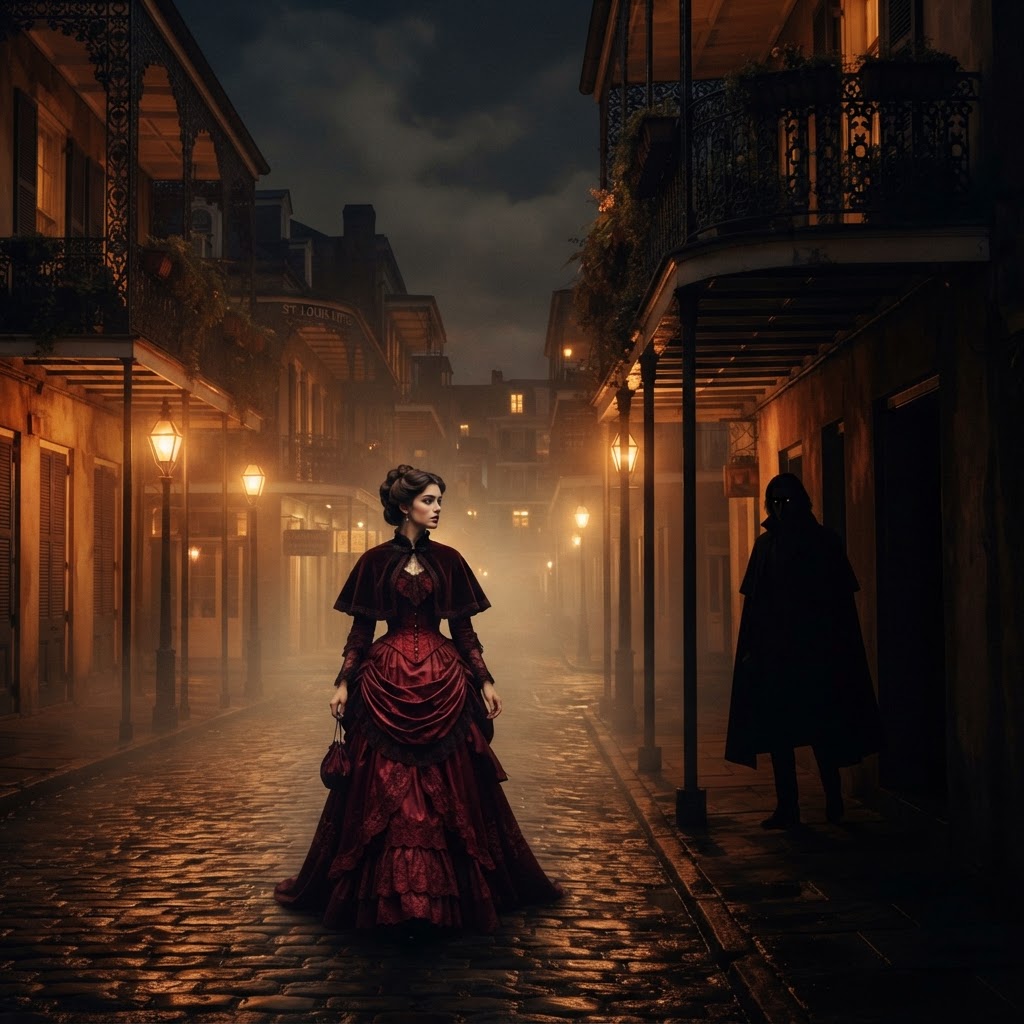
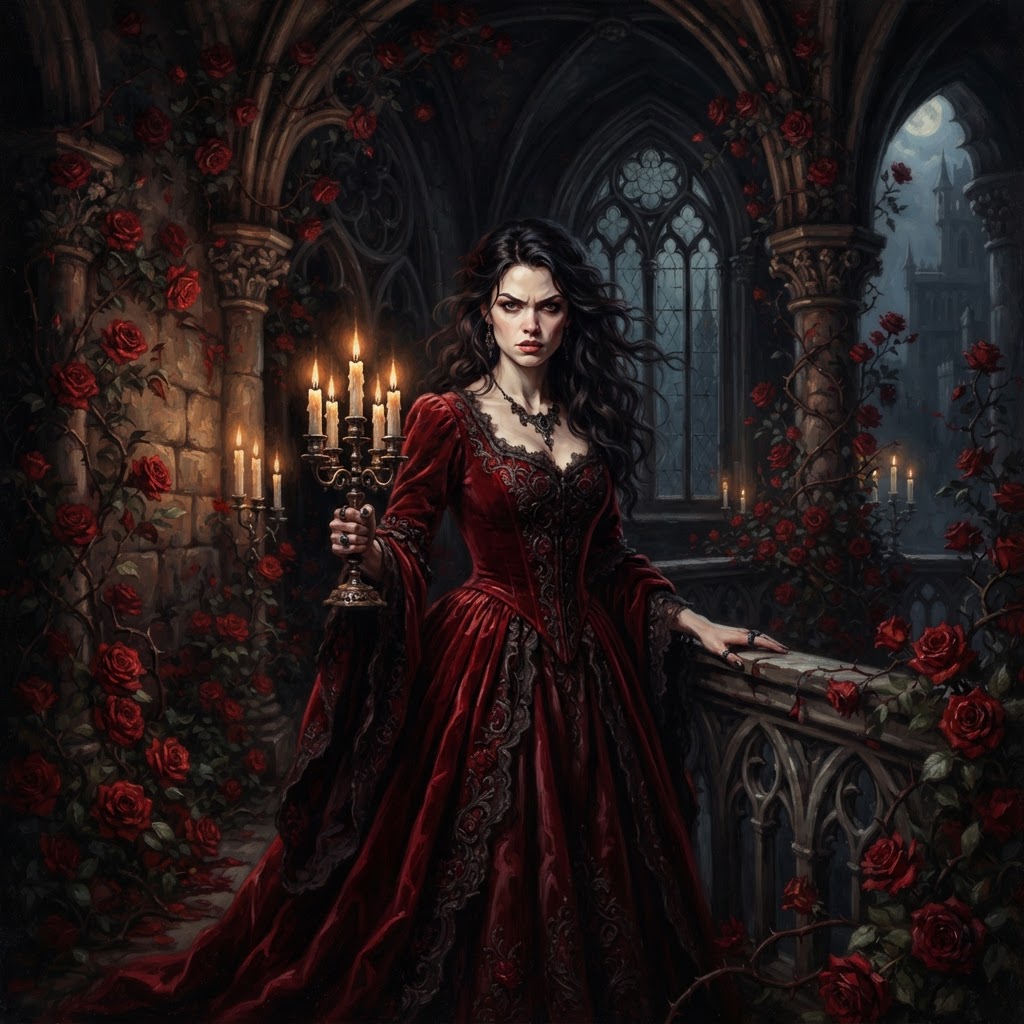
Before Dracula, There Was Her
Every vampire story you know (Dracula, Twilight, Interview with the Vampire, everything on this site) traces its bloodline back to a 108-page novella published in an Irish literary magazine in 1872. Sheridan Le Fanu's Carmilla predates Bram Stoker's Dracula by twenty-six years. Stoker himself acknowledged its influence. Without Carmilla, there is no Dracula. Without Dracula, there is no vampire genre.
And yet most people have never read it. That should change.
What It's About
Laura is a young woman living in a secluded castle deep in the forests of Styria, Austria, with her widowed English father. Her life is quiet, isolated, and achingly lonely.
One night, a carriage accident near the castle brings a beautiful stranger into their home, Carmilla, a young woman of Laura's age, left in their care by her traveling mother. Laura is immediately drawn to her. Carmilla is warm, affectionate, intense in ways Laura has never experienced. Their friendship deepens rapidly, charged with an intimacy that Laura can't quite name.
But something is wrong. Laura begins having nightmares. A mysterious illness creeps through the village. Young women are dying. And Carmilla (who sleeps past noon, refuses to pray, and vanishes for hours at night) is hiding a secret that is centuries old. She is Mircalla, Countess Karnstein, and she is not alive.
Why It Still Matters
Carmilla is remarkable for what it accomplished in 1872. Le Fanu wrote a story where the vampire is a woman, the victim is a woman, and the relationship between them is unmistakably romantic. In Victorian England, where homosexuality was criminalized and women were treated as property, Le Fanu smuggled a sapphic love story into horror fiction, and when questioned about it, reportedly claimed that as a supernatural creature, Carmilla had no gender, so it couldn't possibly be improper.
The novella also inverts the power structures of its era. The male characters (Laura's father, the General, the Baron) are uniformly helpless. They cannot protect the women in their care. The women, meanwhile, make every meaningful choice in the story. Carmilla is the predator, Laura is the narrator, and the men arrive too late to matter.
And Le Fanu's prose is genuinely beautiful. The Styrian forest, the crumbling castle, the strange intimacy between Laura and Carmilla. It's atmospheric writing that holds up against anything written today.
What You Should Know Before Reading
This is a novella, not a novel, roughly 108 pages depending on the edition. The pacing is Victorian, which means slow by modern standards. The language is formal. The horror is atmospheric rather than graphic.
Some modern readers find Laura frustratingly passive. This is partly the character's naivety and partly the constraints of Victorian fiction: a female narrator in 1872 could not have the agency of a modern protagonist.
The ending is abrupt and somewhat unsatisfying by contemporary standards. Le Fanu resolves the plot through the male characters' investigation rather than Laura's action. But the final paragraph (Laura's confession that she can still feel Carmilla's presence, that she is "not sure" the vampire is truly gone) is one of the most haunting endings in Gothic literature.
The Velvet Coven Verdict
Carmilla is not just a historical curiosity. It's a genuinely atmospheric, emotionally complex piece of fiction that invented an entire genre. If you care about vampire fiction (if you love the books on this site) you owe it to yourself to read the story that started it all. It takes two hours. It will stay with you much longer.
Content note: Predatory relationship dynamics, death, Victorian-era horror, sapphic themes.
Quick Reference
- Author: Joseph Sheridan Le Fanu (1814–1873)
- Published: 1872 (serialized in The Dark Blue, collected in In a Glass Darkly)
- Series: Standalone novella
- Pages: ~108
- Setting: Styria, Austria, 19th century
- Tropes: Sapphic vampire, gothic atmosphere, isolated castle, predator/prey, unreliable narrator
- Spice level: 0/5: intense emotional intimacy, no explicit content
- Legacy: Direct inspiration for Bram Stoker's Dracula (1897)
- Available: Public domain: free on Project Gutenberg